Yashie: Bridging Traditional Calligraphy and Modern Design Aesthetics
In the evolving landscape of graphic design, typography serves as the voice of visual communication. For projects rooted in cultural heritage, specifically within the Islamic world, finding a typeface that honors tradition while speaking to a contemporary audience has historically been a challenge. Designers often had to choose between rigid, digitized versions of classical scripts or modern sans-serifs that lacked cultural soul. Yashie emerges as a solution to this dichotomy, representing a sophisticated fusion of traditional calligraphic elements and a clean, minimalist aesthetic. This font is not merely a collection of characters; it is a design tool that allows creators to infuse their work with Islamic elegance without sacrificing modern readability.
The Anatomy of a Modern Islamic Typeface
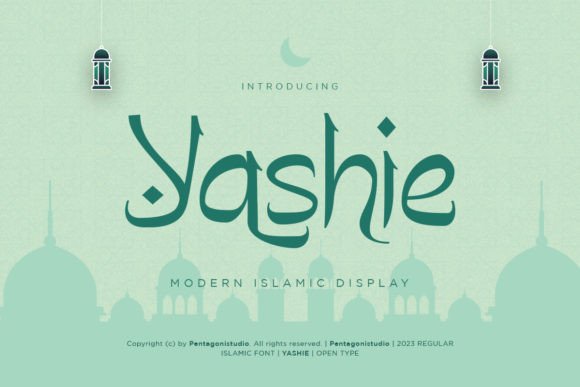
To understand the utility of Yashie, one must first appreciate its structural foundation. The font draws heavy inspiration from classic Islamic art and design, capturing the flowing, graceful nature of handwritten calligraphy. However, unlike traditional scripts that can sometimes appear ornate or difficult to decipher in digital formats, Yashie employs clean lines and a contemporary twist. The result is a display font that feels organic yet precise.
The characters are designed with a specific attention to balance. In traditional calligraphy, the interplay between thick and thin strokes creates rhythm. Yashie replicates this rhythm but simplifies the execution to suit modern screen resolutions and print standards. The "flowing" quality mentioned in its design philosophy ensures that words connect visually, guiding the reader's eye smoothly across the page. This makes it particularly effective for headlines, logos, and short-form content where impact is paramount.
Technical Precision: The Power of PUA Encoding
A defining technical characteristic of Yashie is its PUA (Private Use Area) encoding. For designers who may not be familiar with advanced typography terms, this feature is transformative. Standard fonts often limit users to the basic alphabet, restricting creative expression. In contrast, PUA encoding allows the font to access a vast library of delightful glyphs, swashes, and alternate characters that are not part of the standard Unicode set.
This means that accessing the full artistic potential of Yashie is effortless. A designer does not need complex scripting or multiple font files to achieve varied looks. By simply mapping specific keys or using a character map utility, one can swap a standard letter for a more elaborate version with extended tails or decorative flourishes. This capability is crucial for creating unique logotypes or distinct branding elements where repetition must be avoided. It empowers hobbyists and professionals alike to customize the text until it perfectly matches the visual tone of the project.
Practical Applications Across Industries
The versatility of Yashie extends far beyond religious contexts. While its roots are in Islamic design, its modern aesthetic makes it suitable for a broad range of industries. The key to leveraging this font lies in understanding where its "elegance" adds value rather than distraction.
- Branding and Identity: For businesses in the halal food industry, modest fashion, or cultural tourism, Yashie provides an immediate visual cue of authenticity. A logo rendered in Yashie suggests a brand that respects heritage while operating in the modern marketplace.
- Packaging Design: Premium products often require packaging that conveys luxury. The graceful curves of Yashie work exceptionally well on tea boxes, spice jars, or cosmetic containers, elevating the perceived value of the product through typographic sophistication.
- Event Invitations: Weddings, Eid celebrations, and cultural galas benefit from the formal yet inviting nature of this typeface. It replaces the need for hand-lettered invitations, offering a consistent, high-quality digital alternative that retains the human touch.
- Social Media Graphics: In the age of Instagram and Pinterest, visuals must stop the scroll. Yashie's distinct style stands out against the sea of generic sans-serif fonts used by influencers and content creators, helping posts gain higher engagement through aesthetic appeal.
Enhancing Educational and Cultural Materials
Educators and researchers focusing on Islamic studies, history, or art history can also find significant value in Yashie. When creating presentation decks, textbook headers, or museum exhibit signage, the choice of font influences how the audience perceives the information. Using a font like Yashie helps contextualize the subject matter, creating an immersive environment for the learner. It bridges the gap between academic rigor and cultural appreciation, making the material feel more accessible and respectful of its origins.
Furthermore, for authors self-publishing books on these topics, Yashie offers a professional look for chapter titles and drop caps. It allows independent publishers to compete visually with major publishing houses by utilizing high-end typographic features that were once reserved for custom commission work.
Workflow Integration for Creators
Integrating Yashie into a design workflow is straightforward, yet it requires a shift in mindset regarding how text is treated. Because it is a display font, it is not intended for long bodies of text. Its strength lies in brevity and impact. Designers should approach Yashie as an illustrative element rather than a utilitarian one.
When working with the PUA encoded glyphs, the workflow becomes experimental. A designer might start with a standard wordmark and then iterate through various swashes to find the perfect combination. This process mimics the traditional calligrapher's practice of writing a word dozens of times to find the most beautiful composition. The difference is that with Yashie, this iteration happens digitally and instantly. Software like Adobe Illustrator, Photoshop, or even Canva (with custom font uploads) can handle these glyphs, provided the software supports OpenType features or character mapping.
It is important to note that because Yashie combines traditional elements with modern minimalism, it pairs well with neutral sans-serif fonts for body copy. This contrast ensures that the headline grabs attention with its cultural flair, while the supporting text remains highly legible. This pairing strategy is a hallmark of professional design and prevents the overall layout from feeling too busy or dated.
Considerations for Global Audiences
While Yashie is inspired by Islamic art, its application is global. In a multicultural society, design often serves as a bridge between communities. Using a font that respectfully incorporates cultural motifs can signal inclusivity and awareness. However, designers must use such tools with sensitivity. The goal is to honor the aesthetic tradition, not to caricature it. Yashie aids in this by maintaining a level of dignity and refinement in its character shapes.
For business owners targeting international markets, adopting a typography style that reflects specific cultural heritages can be a powerful differentiation strategy. It signals to the consumer that the brand understands and values specific cultural nuances. Whether it is a coffee shop in London aiming for a Middle Eastern vibe or a tech startup in Jakarta wanting to project local pride, Yashie offers a visual language that transcends borders while remaining grounded in identity.
The Future of Digital Calligraphy
The existence of fonts like Yashie signals a broader trend in typography: the digitization of hand-crafted arts without losing their soul. As technology advances, we can expect more fonts to utilize PUA encoding and advanced glyph sets to offer deeper customization. For the current generation of creators, Yashie represents the state-of-the-art in this category. It proves that one does not have to sacrifice the warmth of human handwriting for the precision of digital vectors.
Moreover, the accessibility of such fonts democratizes design. Previously, achieving a look similar to Yashie required hiring a skilled calligrapher, which could be cost-prohibitive for small businesses or students. Now, the barrier to entry is significantly lower. A student working on a thesis, a hobbyist designing a family tree, or a startup founder creating a logo can all access the same level of typographic elegance. This democratization fosters creativity and allows for a richer diversity of voices in the visual landscape.
Making the Right Choice for Your Project
When deciding whether Yashie is the right fit for a project, consider the emotional response you wish to evoke. If the goal is strict corporate neutrality, a standard geometric sans-serif might be better. However, if the objective is to convey warmth, heritage, elegance, and a touch of the exotic, Yashie is unparalleled. Its ability to function as both a nod to the past and a tool for the future makes it a valuable asset in any designer's toolkit.
Ultimately, the success of using Yashie depends on the designer's ability to balance its decorative nature with functional clarity. By leveraging its PUA encoded features wisely and pairing it with complementary typefaces, creators can produce work that is not only visually stunning but also deeply meaningful. In a world saturated with generic digital assets, choosing a font with such distinct character and historical resonance is a statement of quality and intentionality.